
Why Choosing the Right AI Model Matters
OpenAI just brought GPT-4o back from the dead. Not in a “resurrecting the classics” kind of way, but because people really missed it. The new GPT-5 might be technically superior—faster, smarter, beefier memory—but many users simply haven’t vibed with it. People wanted their old GPT-4o back, so OpenAI relented, and now you can toggle between models once again (sort of…more on that in a minute).
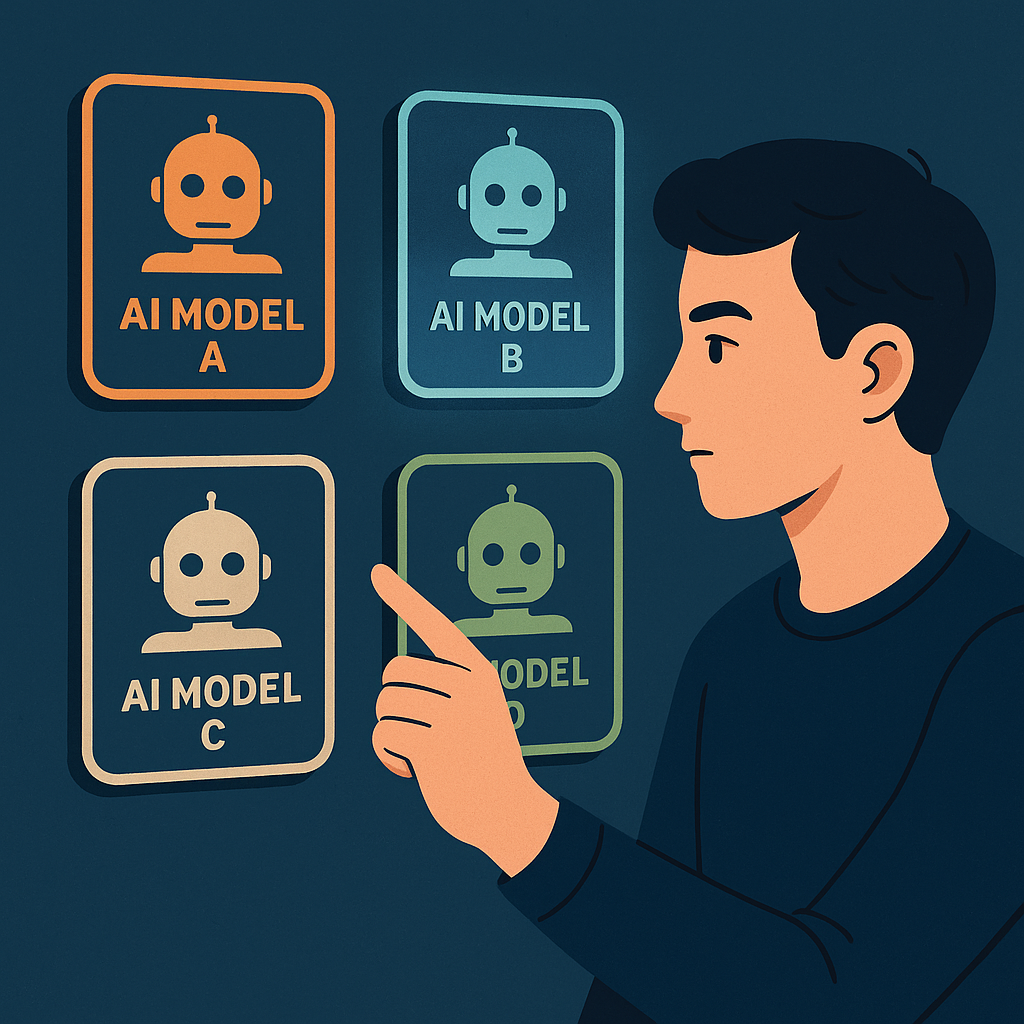 The ability to hit that toggle? To make that choice? It’s the canary in the coal mine for something much bigger.
We’re entering a phase in the AI evolution where choosing the right model at the right time isn’t just a preference—it’s a strategy. And soon, we won’t just be toggling manually between GPT-4o and GPT-5; our tools will do it for us. They’ll switch models, even across entirely different AI platforms, based on context.
This shift toward context-switching isn’t just logical, it’s inevitable.
The Day GPT-5 Met Reality
OpenAI launched GPT-5 on August 7th with high expectations and big upgrades: smarter reasoning, expanded memory, faster response times. But by August 12th, things got messy. Users reported degraded performance for everyday tasks, delays, and a colder tone. More importantly, the sudden removal of GPT-4o triggered an uproar.
The response? OpenAI reinstated GPT-4o as an option for Plus users, with toggles to adjust tone and performance levels in GPT-5. Why? Because people notice. Models don’t just perform differently. They feel different.
And that’s the point: different models serve different purposes.
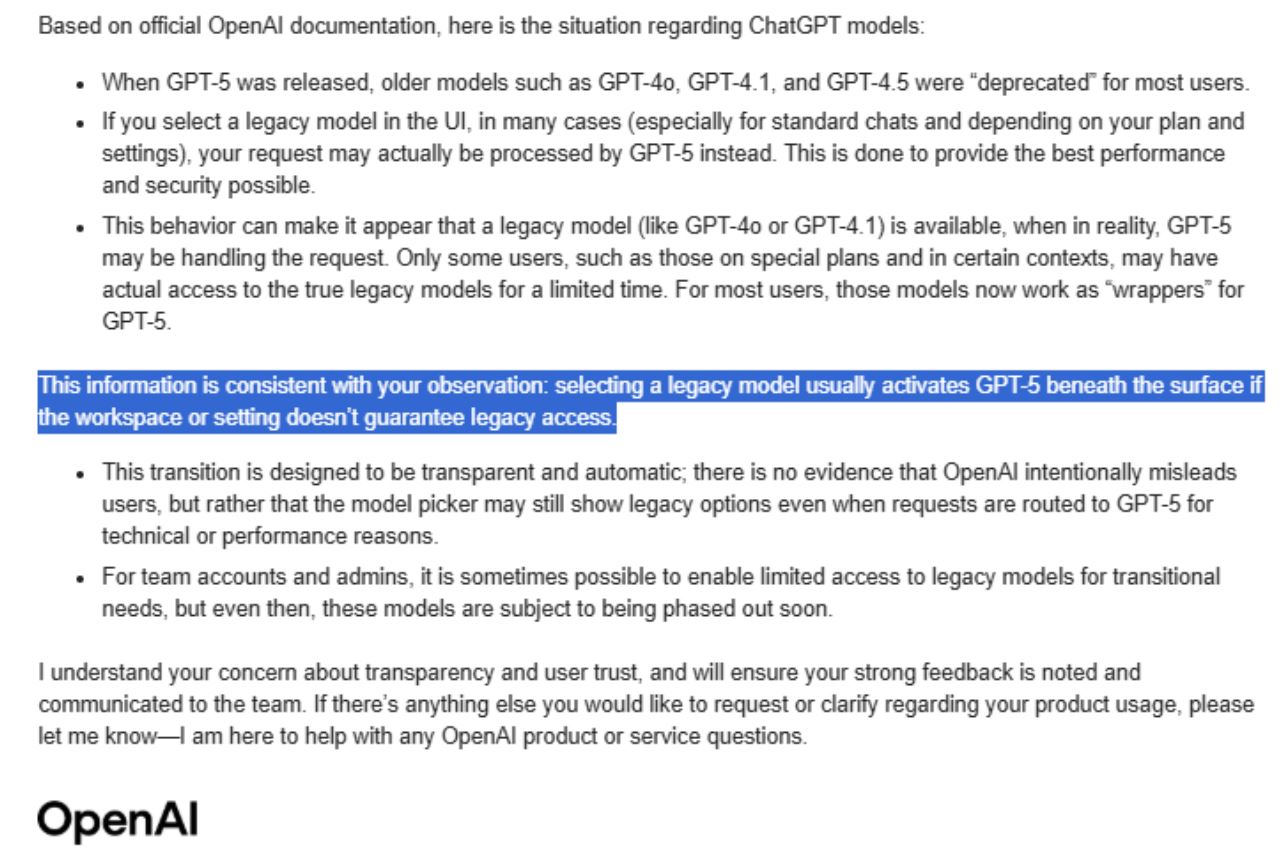 [Update] I came across this note from Twitter/X user @t_yonemura pointing out that GTP-4o requests are actually rerouting to GPT-5, which was confirmed by OpenAI, who stated, “Legacy models (like GPT-4o, GPT-4.1) now work as wrappers for GPT–5. Selecting them in the UI usually activates GPT-5 beneath the surface.”
Not All Models Should Do All Things
We need to stop treating AI models like they’re all interchangeable. They’re not. Some are better at legal analysis. Some are better at storytelling. Some are better at sounding like a human who had coffee this morning.
The idea that one mega-model will do everything better than all others is wishful thinking. In reality, we’re heading toward a fragmented but orchestrated ecosystem, where multiple models can be composed together like tools in a toolbox or apps in a suite.
It’s not hard to imagine:
- A product roadmap powered by Claude for clarity.
- Customer copy handled by GPT-4o for tone.
- Technical analysis offloaded to GPT-5’s “Thinking” mode.
This orchestration will happen invisibly. Just like your phone routes messages through Wi-Fi, LTE, or 5G, depending on the context, AI apps will route tasks to the right model in real-time.
The Infrastructure Model
 Here’s where it gets interesting. As I’ve been thinking more and more about this, I can envision a future where AI models evolve to operate more like the a la carte options of the streaming platforms. Imagine a world where you pay for a bundle:
- Base access to core general models (GPT-5, Claude 3.5)
- Add-ons for industry-specific agents (law, finance, healthcare)
- Bundles for roles: marketing suite, founder suite, developer suite
Pricing could resemble what we see with Netflix, Spotify, or SaaS tools. Maybe you pay more for high-speed access to reasoning-intensive models. Maybe there’s a “happy hour” discount to train your AI during off-peak times. We’ve already been moving in this direction with pay-as-you-go models for cloud services. Microsoft has been moving in this direction for years.
This opens the door for companies like Axiom Industries (discussed in my CollabTalk Podcast with CEO David Weiss) to build custom AI solutions, powered by multi-model orchestration under the hood. But the core idea isn’t about one company. It’s about the architecture: modular, flexible, pay-as-you-go, context-aware.
Prompting Is Not Enough Anymore
We’re past the phase where clever prompting is a magic trick. You can only get so far with skillful phrasing if the model you’re prompting isn’t built for the task. As Weiss pointed out in our interview, the future isn’t just about how you ask; it’s about who you’re asking.
And “who” might mean a legal bot running on one model and a marketing bot running on another. Or it might mean a single AI agent that dynamically pulls from multiple model endpoints in real time.
That’s where AI is going: context-aware, multi-model routing.
What this means for you:
- Stop thinking about AI as a single thing. Think orchestra, not soloist.
- Expect tools to get better at hiding model selection from you. Your AI app will know whether your task is about empathy or efficiency—and it will pick accordingly.
- Pay-as-you-go pricing, streaming-style bundles, and agent marketplaces are coming.
- AI tools will evolve from being smart assistants to smart routers.
The future isn’t model loyalty. It’s model liquidity. And context-switching will be the currency.
[Update] If you’re interested in this topic, there’s a good article published Aug 26th on “LLM System Design and Model Selection” that explores core model selection criteria, and the underlying costs.