The Real Impact of AI at Work
Everyone’s talking about AI at work like it’s either the beginning of utopia or the end of civilization. Depending on who you ask, you’ll hear it’s going to free us from mindless drudgery, or it’s going to quietly eat your job while smiling politely through a chatbot interface.
The truth? Like most things that actually matter—it’s complicated.
 Microsoft recently published a deep dive into how they’re measuring the impact of Microsoft 365 Copilot internally [Measuring the impact of Microsoft 365 Copilot and AI at Microsoft]. And say what you will about tech giants, but the transparency here is refreshing. While the rest of us are still figuring out how to spell “ROI” with AI, Microsoft’s IT team is already working with a full-blown value framework that tracks productivity, quality, security, cost savings, and even employee experience. It’s like a FitBit for your AI initiatives, only less judgy and more enterprise-grade.
The takeaway from Microsoft’s approach is that AI’s workplace impact isn’t just theoretical anymore—it’s measurable, repeatable, and (importantly) improvable. They’re not just hoping for value; they’re instrumenting it. And that’s where most of us need to catch up.
Measuring, Not Manifesting
I’m in the midst of a Copilot training project with a massive, global client that is trying its best to roll out AI organically, with adoption in mind. This project has given me a front row view into what works and what doesn’t work in changing organizational culture around AI. Here’s the thing about AI in the workplace: it’s not enough to roll out some tools, pat yourself on the back, and wait for productivity to soar. Microsoft’s article underscores the importance of intentional design. They treat AI measurement as a first-class citizen in project planning—not an afterthought.
They’ve developed a modular framework to track metrics across six categories: revenue, productivity, risk, experience, quality, and cost. Some of these have clean numbers attached. Others—like “employee satisfaction”—are more nuanced. But the bigger point is this: AI implementation isn’t a fire-and-forget missile. It’s a living process, with continuous feedback loops, testing, and iteration. Less sci-fi, more Six Sigma. That’s been our approach on this client project, as well.
This kind of structure is especially necessary because—let’s face it—AI tools don’t always behave predictably. One department might see huge gains in efficiency, while another finds itself spending more time double-checking what the AI just “helpfully” suggested.
The Magic and Mess of Reality
Outside Microsoft’s polished corridors, reality is always a little messier. While Copilot and tools like it are undeniably powerful, they can also be a bit… eager.
Take SharePoint, for instance. AI-powered agents in SharePoint now have the ability to read, summarize, and surface content across massive data repositories. Sounds great—until someone realizes the AI is surfacing files marked “do not share” because permissions weren’t set up properly in 2017. And most of what we’re doing with AI to date has been manual (enter a prompt, get output). Just wait until the next phase of automation. AI agents can behave like overly helpful interns with zero context and access to everything. They won’t pause when content appears that you, the human, recognize as something you shouldn’t have access to.
The scary part? These agents live in your document libraries as if they were just another file. No audit trails, no lifecycle management, no clear owner. Without proper governance, you don’t just have “AI at work”—you have rogue logic sitting on top of legacy sprawl. Not ideal.
So yes, AI brings huge efficiency gains, but it also shines a very bright light on all your pre-existing security holes and bad habits.
People Are Still the Point
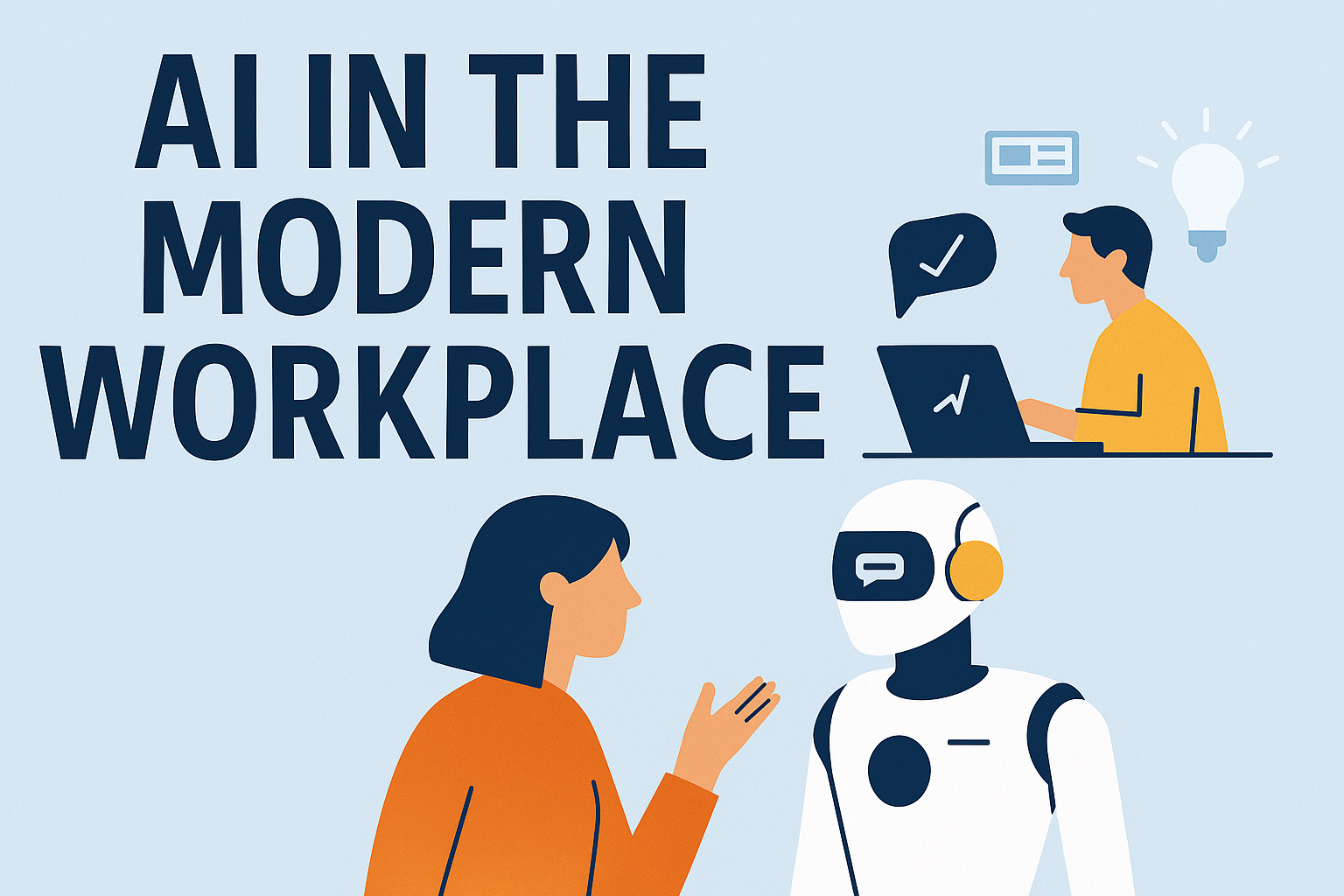 While some articles like to cast AI as the inevitable steamroller of labor, that’s not a useful framework if you’re trying to actually build something sustainable. Yes, automation will replace tasks. Yes, some roles will evolve or disappear. But we’ve been through this movie before: printing press, electricity, the internet, and most recently, workloads moving to the cloud. Each revolution forced us to redefine work, not abandon it.
The challenge is making sure we don’t take the lazy path of “automate everything and fire the rest.” The shape of the AI future depends on the choices we make now. Do we build tools to augment people, or do we chase efficiency at the expense of human contribution?
That’s more than a philosophical question—it’s a practical one. Augmented intelligence has the power to make employees across every role, not just executives, more effective and confident. From a warehouse worker using AI-powered vision tools to reduce errors, to a nurse getting real-time decision support—these are real, tangible upgrades. But they only work if AI is designed as a partner, not a boss.
Managing the Hype Curve
Let’s also not pretend that AI adoption is seamless. Implementing these systems costs money, requires serious training, and comes with a steep learning curve. Businesses that jump in without planning for the complexity often find themselves stalled mid-transformation, wondering why their “digital twin” just recommended merging with their own supplier.
AI doesn’t fix your broken workflows. It amplifies them. If your data is bad, your AI outputs will be confidently wrong. If your team isn’t trained, automation will confuse more than it helps. And if your org lacks a feedback culture, you won’t even know where things are breaking.
And then there’s the human side—privacy, trust, and ethics. Employees are right to question how their data is used. People don’t want to be turned into productivity metrics or watched by surveillance bots that smile while they log bathroom breaks. If we don’t address this transparently, we risk backlash that could stall even the best-intentioned efforts.
Optimism, With a Seatbelt
All of that said—yes, I’m still optimistic. I believe AI can and will make work better. But it has to be wielded with a bit of humility and a lot of intention.
The Microsoft framework shows what good looks like: measure what matters, align with business priorities, build a feedback loop, and be willing to embrace the red when things don’t go as planned. The rest of us don’t need to replicate it overnight—but we can borrow the mindset.
Because at the end of the day, AI at work isn’t about replacing people. It’s about rethinking what people are capable of when they’re not buried in tedium. The real promise of AI is not just getting more done—but getting the right things done, faster, and maybe even with a bit more sanity.
That’s not a future to fear. It’s one to build—carefully, collectively, and yes, with your eyes wide open.