
Why Change Fails and How Systems Thinking Helps
Back in the late 1990s, while working through my graduate program, I seriously considered switching from an MBA in Technology Management (MBA-TM) to a Master of Arts in Organizational Management (MAOM). I was fascinated by how companies respond to change. Every course, case study, and group project made it clear that the same shift—a new system, a new process, a new way of working—could succeed in one organization and fall apart in another. At work (the phone company) I was applying what I was learning, and documenting my experiences through school projects. Leadership style played a part. Culture played a part. So did the unspoken habits that shape how teams communicate and make decisions.
 That interest never went away. In fact, the more technology accelerates, the more obvious it becomes that the hardest part of transformation isn’t the technology at all. It’s how people and systems react to what the technology enables. Organizations still underestimate how a change in one area puts pressure on others, or how small gaps in process and communication can stall even the best-intended efforts.
Most companies say they want to evolve. Fewer are prepared for what that actually means. New platforms roll out, new processes get announced, and teams are told to adopt something that makes sense in one corner of the business but disrupts everything in another. The result is predictable: well-intended change efforts stall, and people quietly find workarounds.
The Problem: Change in One Area Creates Pressure in Another
Modern workplaces run on tightly connected systems. A new collaboration tool affects compliance expectations. A workflow change affects how teams share information. Even small adjustments ripple across departments, creating extra steps, new risks, or unexpected delays.
The trouble is that most organizations still approach transformation as a series of upgrades. But upgrades aren’t the same as organizational change. When one team modernizes without looking at downstream effects, friction grows. IT gets overwhelmed by requests. Security steps in to tighten controls. Business units adopt their own tools to keep moving. Before long, the organization is juggling overlapping systems and competing priorities.
Systems thinking offers a better path. It forces leaders to map how work actually moves across teams and understand where their decisions will help or hinder the rest of the business.
Systems Thinking Makes Change Predictable Instead of Reactive
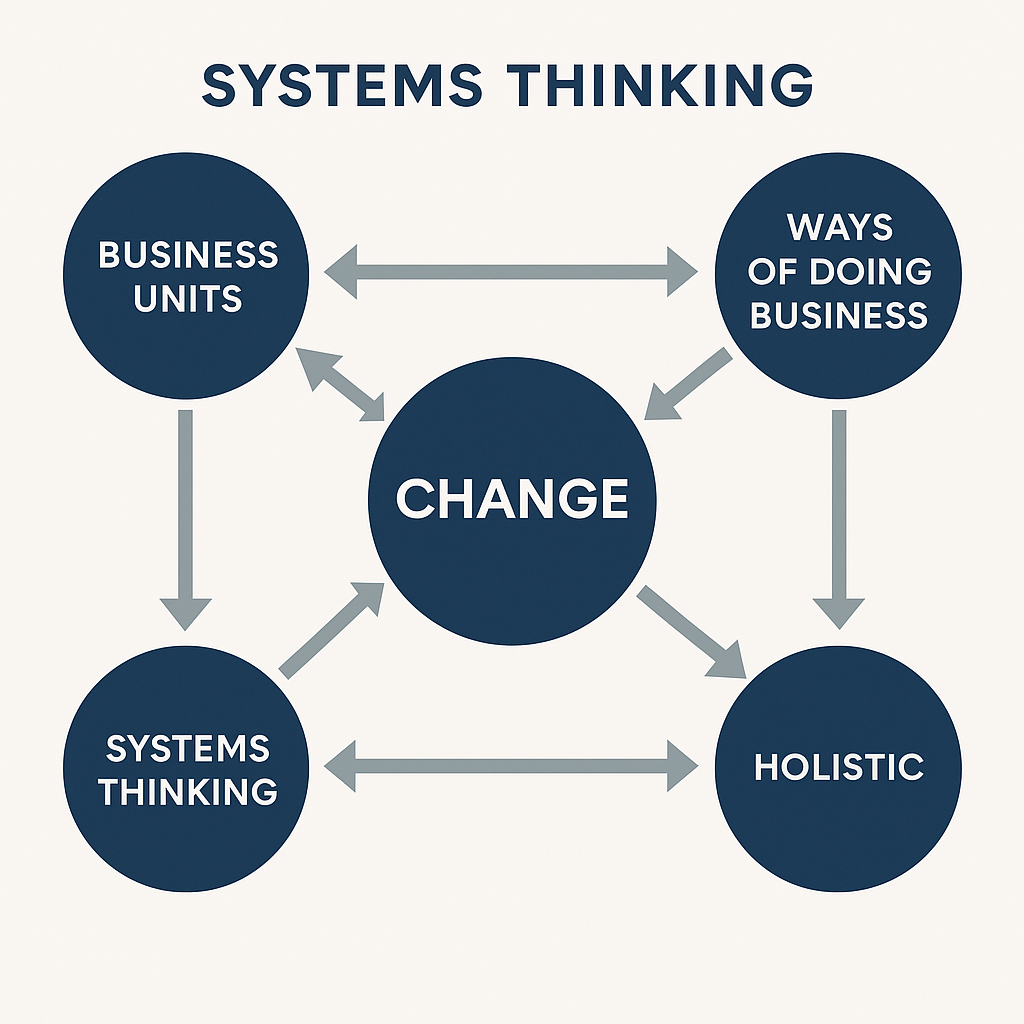 A systems-thinking approach asks a few simple but telling questions:
- If we introduce this change, who else is affected?
A new document-management approach might streamline one group’s work but add hours of manual effort for another. - What behaviors will this change create?
When approvals slow down, people look for shortcuts. When search becomes unreliable, teams start storing files in separate places. These reactions aren’t resistance, but survival. - What else needs to shift to support the change?
A modern platform without modern governance won’t deliver results. A new workflow rolled out without training will create confusion rather than adoption.
Seeing these relationships early helps organizations predict issues instead of reacting to them. Teams feel informed instead of blindsided.
Why Incremental Wins Still Matter, But Only With a Broader View
Small pilots and phased rollouts remain useful. They reduce risk and give teams time to adjust. But they can’t exist in a bubble. A pilot that ignores dependencies creates false confidence. A pilot that considers those dependencies becomes a strong foundation for the rest of the business.
Each small win should serve as a test:
What did this shift uncover about how our organization really works? What should we change next?
This mindset keeps transformation grounded and avoids the cycle of quick fixes that don’t hold up.
Technology Change Is Faster Than Organizational Change
Platform updates arrive constantly. New features, automation tools, analytics capabilities, and integrations land every month. The speed is impressive, but it also widens the gap between what technology can do and what organizations can absorb.
Teams don’t fall behind because they’re unwilling. They fall behind because every new feature touches process, governance, training, and culture. When the backlog grows, employees look for tools outside IT’s oversight. I talked about this in a recent episode of Project Failure Files, and also mentioned it in a video short. They aren’t trying to break rules. They’re trying to get work done.
A systems lens helps leaders decide which changes matter now, which can wait, and which require adjustments across multiple parts of the business.
Culture Is Still the Hard Part
Even with a strong roadmap, transformation depends on people. Cultures that reward quick answers over thoughtful planning struggle the most. So do cultures where communication moves slowly or where decisions come from only a few voices.
A sustainable change culture tends to have three traits:
- Clarity: People know why the change matters and how it affects their day-to-day work.
- Responsiveness: Issues raised by teams get quick, meaningful attention.
- Shared ownership: Change isn’t something IT “launches.” It’s something employees shape and sustain together.
These traits don’t show up in a project plan, but they determine whether a plan succeeds.
Every organization has people who naturally see the connections between teams, tools, and processes. They understand how one workflow affects another and how small decisions impact the broader system. They’re not always in formal leadership roles, but they play a critical part in making transformation work.
These people should be invited into planning early. They can help stress-test assumptions, shape communication, and guide how pilots evolve. Their insight often prevents the most costly missteps.
A Holistic Transformation Strategy Beats a Tool-First Strategy Every Time
Lasting transformation requires more than choosing the right platform. It means:
- aligning tools to real business processes,
- updating governance so it supports rather than slows progress,
- anticipating how shifts ripple across systems and teams,
- preparing people for new expectations, and
- building a culture that adapts without losing control.
When organizations treat change as interconnected—not isolated—they avoid rework, reduce risk, and build solutions that teams actually want to use.