
What Happened to Social Media’s Impact?
There was a time when social media felt concentrated. If you wanted reach, conversation, and measurable impact, you showed up on one or two platforms and did the work. Twitter was the clearest example. You could host a TweetJam, rally a community for an hour, and walk away with massive impressions, genuine engagement, and new relationships that actually mattered.
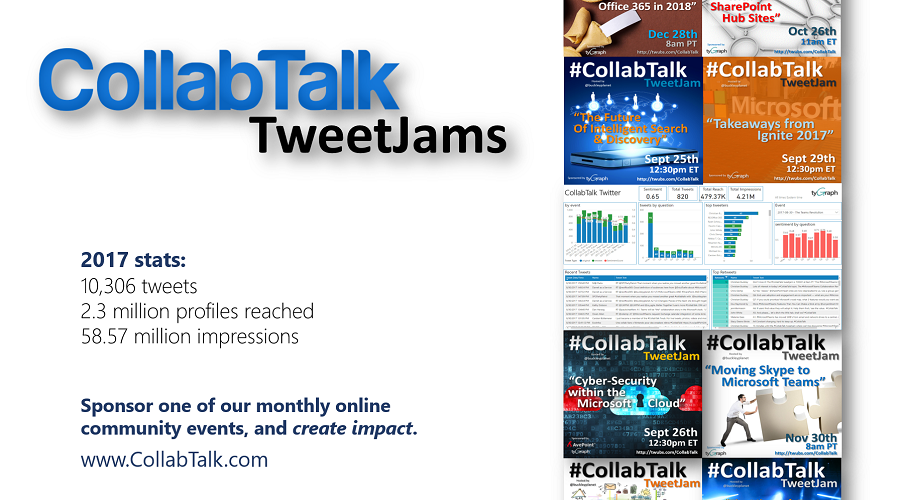
The graphic below captures that moment well. Twelve months of monthly TweetJams. Over ten thousand tweets. Tens of millions of impressions. Those numbers weren’t exceptional at the time. They were normal. They were expected.
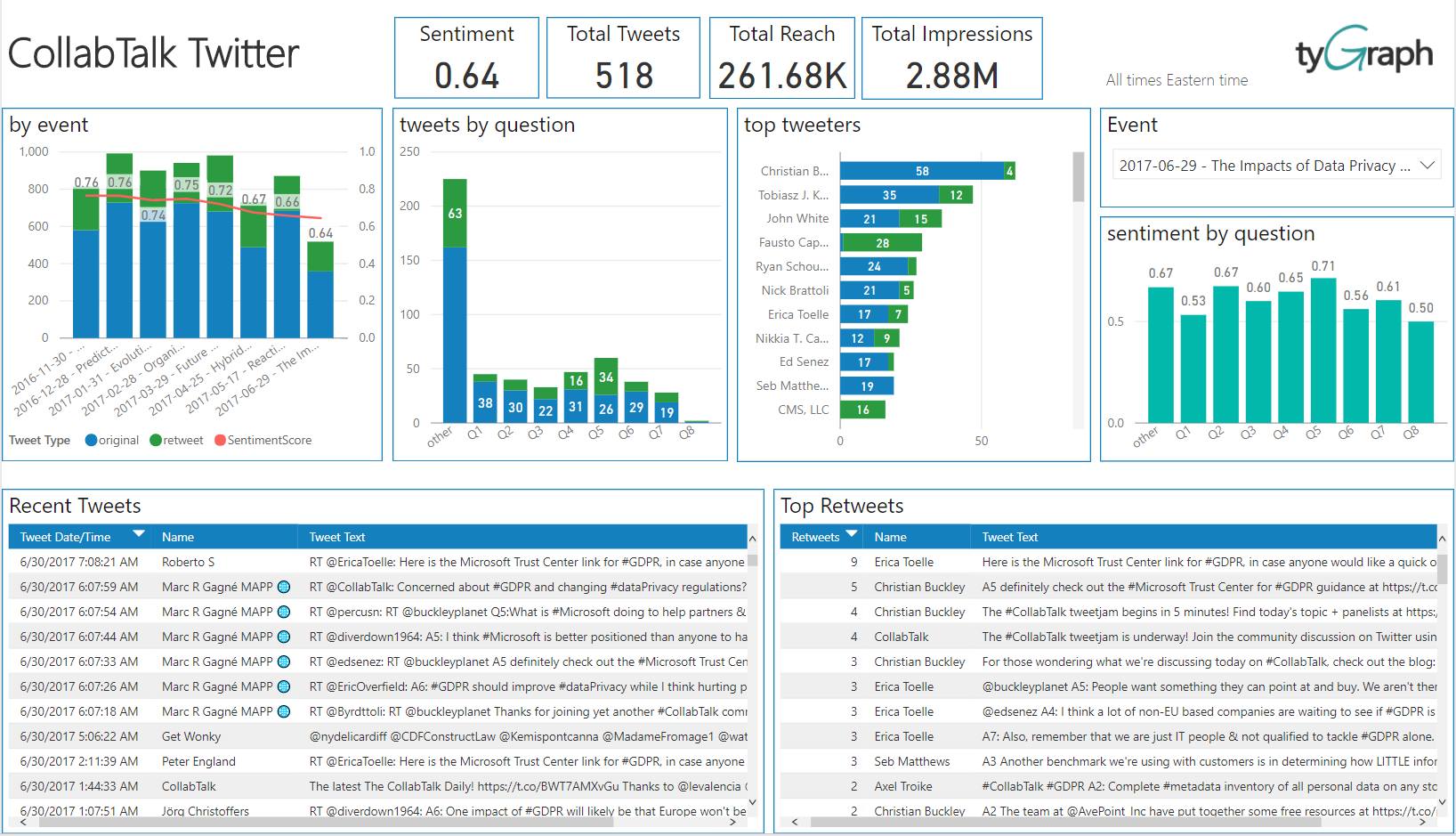
Here’s another view of the data for a simple monthly event, pulled from the once freely available Twitter API, tabulated by long-time sponsor tyGraph:
Today, that same tweetjam format struggles to break through. Twitter, now X, is growing again after a long decline, but the impact isn’t what it once was. The question isn’t just “what happened to Twitter?” It’s what happened to social media itself.
The Twitter Effect Was Real, Even If It Was Inflated
It’s fair to say that early Twitter metrics were inflated. Impressions were easy to rack up, timelines were open, and retweets traveled far. But inflated doesn’t mean meaningless. TweetJams worked because attention was centralized. People showed up at the same time, in the same place, for the same conversation.
That center of gravity is now gone.
When X began changing under new ownership, the platform didn’t just lose users. It lost predictability. Algorithm changes, verification shifts, reduced visibility for links, and a constant sense of instability all affected how content traveled. Even now, with usage rebounding, reach feels narrower and more volatile. Conversations still happen, but they don’t echo the way they used to.
Ironically, X remains the number one platform for breaking news. Journalists, analysts, and industry insiders still rely on it. But news consumption is not the same as community participation. TweetJams depend on the latter, and that’s where the decline shows most clearly.
Fragmentation Didn’t Replace the Center, It Shattered It
As people drifted away from Twitter, the assumption was that a new hub would emerge. Instead, attention became scattered.
Threads arrived with massive sign-ups and little staying power, if only because it is owned by Meta and pushed heavily upon Facebook and, mostly, Instagram users. Mastodon appealed to technologists and decentralization advocates but never reached critical mass. Bluesky gained some momentum as a reaction to Elon Musk’s acquisition of Twitter, yet it remains small and culturally narrow with a politically far-left-leaning audience. Each platform took a slice of the audience, but none replaced the whole.
This fragmentation matters. A conversation spread across five platforms is not five times as powerful. It’s weaker. Each audience is smaller, each algorithm different, and each community harder to mobilize at scale.
At the same time, a large segment of professionals quietly opted out of being broadly social online at all. For many, LinkedIn became the only platform worth maintaining. Not for discussion or events, but for visibility, credibility, and business relevance. That shift alone signals something fundamental has changed.
To see why impact feels smaller, it helps to look at where attention actually lives today.
Estimated Social Platform Reach (Scale vs. Habit)
- Facebook (≈ 3.0B monthly / ~2.0B daily)
- YouTube (≈ 2.7B monthly / ~1.5B daily)
- Instagram (≈ 3.0B monthly / ~1.3B daily)
- TikTok (≈ 1.6–1.7B monthly / ~1.0B daily)
- WhatsApp (≈ 2.7B monthly / ~2.0B daily)
- LinkedIn (≈ 1.0B accounts / ~350–400M monthly)
- X (≈ 550–600M monthly / ~250M daily)
- Snapchat (≈ 900M monthly / ~400M daily)
- Reddit (≈ 800M monthly / ~100–150M daily)
- Threads (≈ 250–300M monthly / far lower daily use)
- Bluesky (≈ 25–30M total users)
- Mastodon (≈ 10–12M total users)
Monthly users show scale. Daily users show habit. The gap between the two explains almost everything.
What These Numbers Actually Tell Us
These stats explain why social media feels weaker, even though usage is higher than ever.
-
Social media didn’t shrink. It fragmented.
The audience is larger, but spread across platforms, formats, and algorithms. There is no longer a single place where attention reliably gathers. -
Video platforms dominate daily behavior.
YouTube and TikTok aren’t just big. They’re habitual. People open them to watch, not to participate in shared conversations. -
Text-based social is now niche by comparison.
X still matters for news and real-time awareness, but its daily audience is small relative to the platforms shaping most attention. -
Participation has been replaced by consumption.
Tweeting, replying, and showing up live require effort. Scrolling video does not. Platforms optimized for ease win time, but lose interaction. -
Professional presence consolidated, not expanded.
Many people narrowed their activity to LinkedIn only, using it as a visibility layer rather than a community space. -
Metrics lost meaning as attention dispersed.
Impressions, reach, and engagement no longer map cleanly to influence because the audience no longer moves together.
The Real Shift Wasn’t Social, It Was Behavioral
The biggest change isn’t about platforms competing with each other. It’s about how people spend their attention. Short-form and long-form video won.
TikTok rewired expectations around discovery. YouTube became a default destination for education, commentary, and entertainment. Instagram leaned harder into video to survive. Facebook’s numbers declined as usage aged upward and engagement thinned.
This matters because video is passive in a way text-based social never was. You watch. You scroll. You move on. Even when platforms add comments, live audio, or video replies, the experience remains consumption-first.
TweetJams are participation-first. They require presence, typing, thinking, and responding. I’ve come to realize that the model no longer matches how most people use platforms today.
Even X’s audio and video features haven’t reversed this. They coexist with the feed, but they don’t recreate the shared urgency that once powered real-time social events.
Measurement Broke Along With Attention
In case you missed my blog post last month, I’ve already touched on this with Klout, and it bears repeating. As platforms fragmented and behavior shifted, measurement lost coherence.
Impressions mean less when feeds are opaque. Engagement means less when audiences are scattered. Influence is harder to define when impact doesn’t show up as visible interaction.
What looks like decline on paper often reflects dispersion, not disappearance. The audience didn’t vanish. It redistributed itself into places that don’t support the same metrics.
Social media didn’t die. Its role changed.
It’s no longer where attention forms first. It’s a secondary layer that supports video platforms, newsletters, podcasts, and direct communities. Influence now builds slowly and shows up unevenly.
The TweetJam stats matter precisely because they document a moment when social media still acted as a shared public square. Today’s platforms favor individual reach over collective experience.
As I tell my clients, community-driven social isn’t impossible — but it has to be intentional, smaller, and often off-platform.
The dramatic change isn’t just lower numbers. It’s the loss of gravity. And once gravity is gone, everything floats apart. That’s the real story behind the decline in impact, and the one my 2017 graphic above tells better than any metric ever could.