Content Strategy: Event-to-Content Flywheel
Most companies invest serious time and money into events. They plan the agenda for months. They promote heavily. They fly teams across the country. Then the event ends, the booth gets packed up, the webinar recording gets buried in a resource library, and the momentum disappears.
It’s a massive missed opportunity.
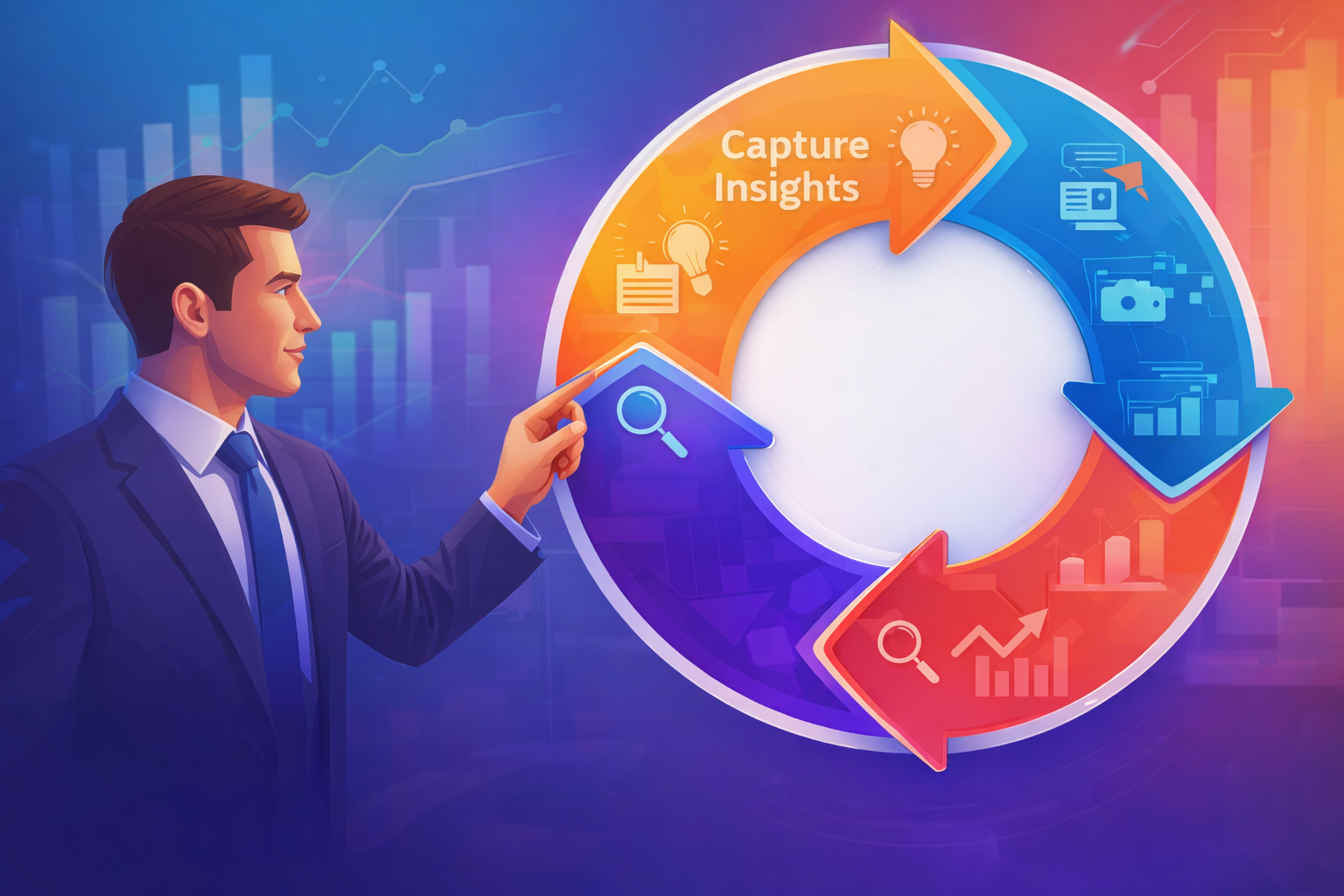 Events shouldn’t be isolated spikes of activity. They should be engines. When approached strategically, a single talk, webinar, or workshop can fuel weeks of high-quality content, inform your editorial calendar, and shape your next event strategy.
In this latest article in my ongoing Content Strategy series, I share a practical framework for squeezing every drop of value from your events. We’ll look at how to capture content in real time, repurpose it quickly, distribute it in the formats people actually consume, and most importantly, use performance data to decide what topics deserve more attention next time.
Because the real power of events isn’t what happens in the room. It’s what you do with it after.
Take Better Notes
At most conferences, you can’t record sessions. The content is often the event’s or the speaker’s intellectual property. So don’t assume you can hit record and repurpose later.
Instead, focus on what you can control: your notes.
Take copious, structured notes. Don’t just summarize slides. Capture:
- Big ideas and recurring themes
- Specific phrases or framing that felt sharp
- Audience reactions and questions
- Points of confusion or debate
- Real-world examples that sparked interest
If a session triggers an idea for your business, jot it down immediately. If a question from the audience reveals a gap in understanding, write it down. If three speakers mention the same challenge in different ways, flag it. Patterns matter.
Your notes are not transcripts. They’re intelligence.
After the event, expand those notes into deeper research. Follow up on cited studies. Connect with speakers on LinkedIn and continue the conversation. Use your notes as raw material for articles, opinion pieces, and analysis. You’re not republishing their content. You’re building on themes and insights to create your own perspective.
If you’re hosting your own webinar or workshop, that’s different. Record it. Plan for repurposing from the start. But when you’re attending an external conference, think like a journalist. Observe. Capture. Interpret.
The goal isn’t to duplicate the sessions you attend, but to translate what you learned into original content that reflects your point of view.
Prewrite Recaps and Social Copy
Speed matters.
Attention around an event fades quickly. If you wait two weeks to publish a recap, you’ve missed the moment. Aim to publish within 24 to 48 hours.
That means doing some of the work before the event happens.
Draft recap templates in advance. Outline likely talking points based on the agenda. Prepare social copy shells with placeholders for quotes and stats. Assign someone to pull key insights in real time. When the session ends, you’re not starting from scratch. You’re polishing and publishing.
Fast publishing does two things. It captures existing buzz while people are still talking about the event. And it signals that your brand is responsive and engaged.
Slice Long Videos into Shorts, Quotes, and Carousels
One 60-minute webinar can turn into:
- Five short video clips
- Ten quote graphics
- A LinkedIn carousel summarizing key points
- A blog post
- An email newsletter
- Two or three discussion posts
Most teams upload the full recording and stop there. That’s the lowest-leverage move.
Instead, look for tight, high-impact moments. A strong statistic. A clear framework. A bold opinion. A practical tip. Clip those into short videos that can live on LinkedIn, Instagram, YouTube Shorts, or wherever your audience spends time.
Pull out sharp quotes and turn them into simple graphics. Summarize complex ideas into swipeable carousels. Break frameworks into individual posts. You’re not repeating yourself. You’re meeting people in the format they prefer.
This is also where you start to see how people are consuming content today. Some audiences want full-length recordings. Others engage far more with bite-sized clips. Your distribution data will tell you.
Package Decks and Notes into Downloadable Kits
If you’re presenting, you have even more leverage.
Turn your slide deck and speaker notes into a clean, downloadable kit. Add a short intro explaining the context. Include worksheets, templates, or bonus resources. If you used scripts at your booth or in demos, refine those into guides or playbooks.
Don’t just upload a PDF and call it done. Frame it as a resource.
For example:
- “The 2026 Event Strategy Toolkit”
- “AI Workflow Framework from Our Conference Session”
- “Step-by-Step Playbook We Used in Our Booth Demos”
Gate it behind a registration wall if that aligns with your lead strategy, or (my preference) offer it freely to build trust. Either way, you’ve extended the life of your presentation far beyond the room.
Build a Landing Page Hub with Internal Linking
Now bring everything together.
Create a dedicated landing page that acts as a content hub for the event. Include:
- The full session recording
- Short video highlights
- The recap blog post
- Downloadable kits
- Speaker quotes
- Related articles on the same topics
Internally link this hub to other relevant content on your site. And link back from those articles to the hub. Over time, this builds authority around specific themes.
Instead of scattered posts, you have a structured content ecosystem. Search engines understand it. Visitors can explore it. Your team can point to it as a single source of truth.
This hub also makes your marketing more efficient. Sales can send prospects there. Customer success can share it with clients. Your team doesn’t have to reinvent explanations every time.
Track Event Topics to Plan the Next Cycle
This is the key piece. Without it, the flywheel stalls.
After the event, look closely at the data. Not just vanity metrics. Real signals. Which sessions had the largest audiences? Which rooms were standing-room only? Where did people ask the most questions? If you had a booth, which topics sparked the longest conversations? What questions came up again and again? Which demos pulled crowds?
Then look at your content performance:
- Which recap posts got the most traffic?
- Which video clips had the highest completion rates?
- Which quotes were shared or commented on the most?
- Which downloadable kits drove the most sign-ups?
Patterns will emerge.
Maybe your AI governance panel was moderately attended, but clips from it outperformed everything online. That tells you the topic resonates digitally even if the in-room audience was smaller.
Maybe a tactical workshop had packed attendance but low online engagement. That might mean it works best in interactive settings rather than as passive content.
This data tells you what your audience cares about right now. It also shows how they prefer to consume it. Are they watching full recordings? Or only short clips? Are they downloading detailed guides? Or skimming summaries? These signals should shape your next event. Double down on hot topics. Invite speakers who can go deeper. Design sessions around the questions people kept asking. Align your booth messaging with the themes that drove real conversations.
The flywheel is simple. Events generate content. Content generates insight. Insight shapes better events.
When you treat every talk, webinar, and workshop as the start of a content engine, you stop chasing ideas. You start responding to real demand.
And that’s when your events stop being isolated moments and start becoming momentum.