
Content Strategy: Making Content a Game Worth Playing
If you’ve ever watched someone spend three hours grinding through Duolingo lessons but abandon a corporate training module after twelve minutes, you already understand the core problem this article is about. It’s not attention span. It’s design.
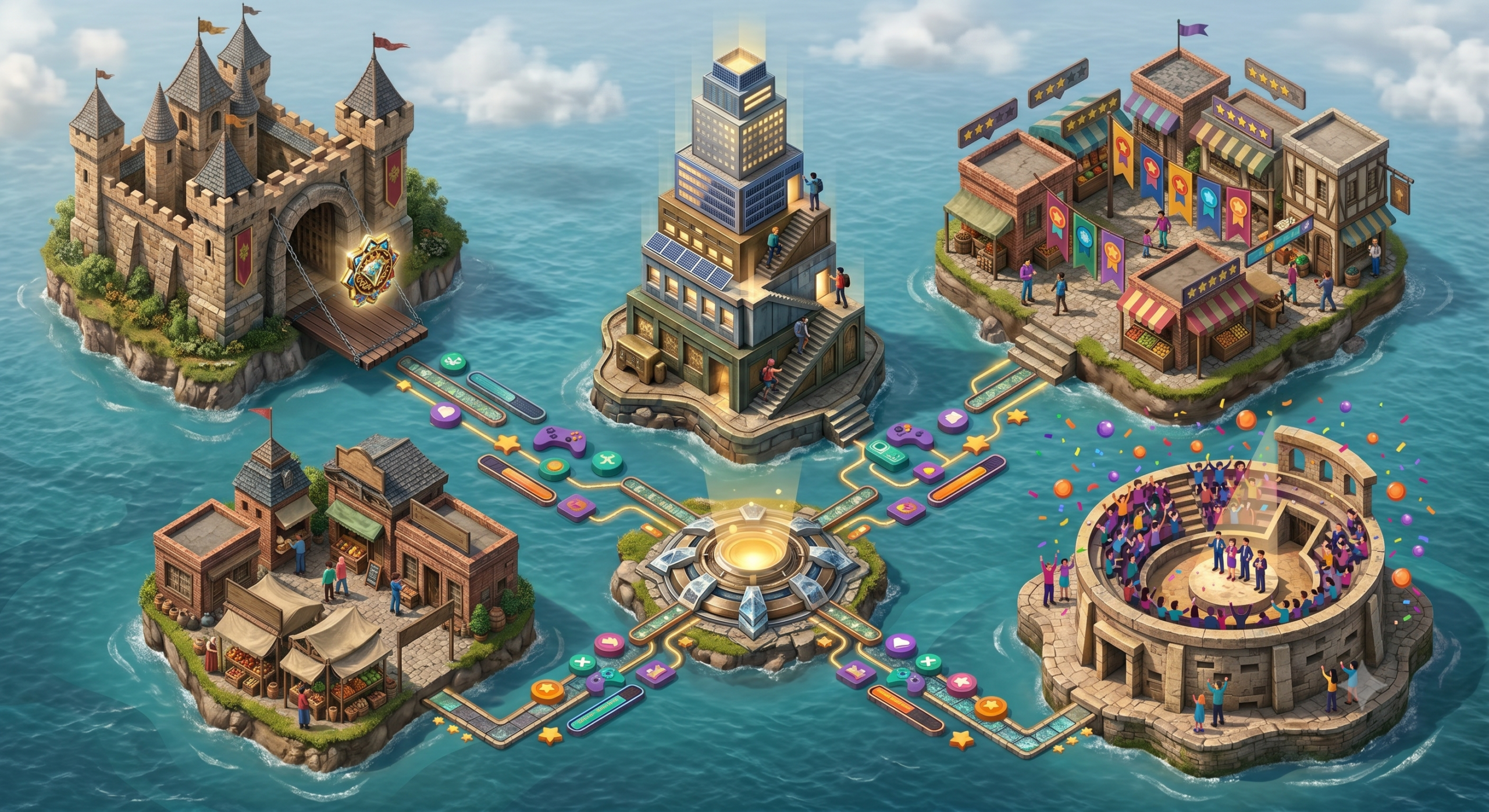 Games give people progress, stakes, and a small hit of satisfaction every time they complete something. Most content doesn’t. And that gap is exactly where gamification lives.
This article is part of my ongoing Content Strategy series, and it fits here for a specific reason. We’ve spent a lot of time in this series talking about moving from isolated content assets to connected experiences that guide people somewhere meaningful. Gamification is one of the most practical and underused tools for doing exactly that, whether you’re a solo creator trying to deepen audience engagement or an enterprise team trying to drive training, adoption, and participation at scale.
To be clear upfront: this isn’t about building a video game or spending a six-figure budget on some elaborate platform. I’ve used lighter versions of these techniques myself, connecting interactive surveys, branching video, and knowledge checks across content campaigns to link pieces together and drive deeper engagement than a standard linear series ever produced. You don’t have to go all-in to see results.
What Gamification Actually Means for Content
At its core, gamification means applying game mechanics to non-game contexts to drive engagement, behavior change, and learning retention. The mechanics themselves are familiar: progress bars, points, badges, leaderboards, streaks, milestone unlocks, and challenges that gate the next step.
What makes them work is psychology. Completion compulsion kicks in when people can see they’re 70% through something. Status signaling matters in professional and community contexts where a badge or leaderboard ranking carries real social weight. Reward loops, effort followed by recognition followed by a new challenge, keep people coming back in a way that a static document simply cannot.
The mainstream example most people know is Duolingo. Every lesson is short, every streak is visible, and the entire experience is designed around the assumption that you will lose motivation if the app doesn’t actively work to sustain it.
The more instructive enterprise example is Salesforce Trailhead. Their Trailblazer program turns product and partner training into a full quest system with “trails,” earned badges, points, and community rank tiers. It drives real adoption, creates a community of credentialed practitioners, and generates platform loyalty that no amount of feature marketing could replicate. It’s the high bar worth keeping in mind, even if you’re starting much smaller.
One honest caveat: game mechanics applied to thin content just create a more elaborate way to waste people’s time. The underlying material still has to be worth engaging with.
Use Case 1: New Hire Onboarding
Traditional onboarding front-loads enormous amounts of information into the first few days, when new employees are overwhelmed and not yet sure what any of it means in practice. Gamified onboarding flips that by making participation the mechanism of learning rather than passive reception.
Instead of handing someone a stack of documents and a calendar full of orientation sessions, you structure their first few weeks as a quest with milestones, visible progress, and unlock conditions that require engagement before advancement.
A few ways this plays out in practice:
-
- A marketing agency requires new hires to submit a mock campaign concept before they unlock the official brand guidelines, forcing genuine engagement before access rather than handing over a document that gets skimmed once and forgotten.
- A tech company builds a scavenger hunt across internal tools where employees find an answer in the knowledge base, verify it in Slack, and submit it through the project system, teaching tool fluency through actual use.
- A retail or hospitality brand runs a points-based track where employees earn badges for shadowing shifts, passing product knowledge quizzes, and completing role-play scenarios, with a shared tracker that creates light social accountability across the cohort.
The key design principle: the challenge should require the knowledge you want them to retain, not just prove they clicked through a slide deck.
Use Case 2: Customer Product Training and Certification
Customers who don’t fully adopt a product churn. Most product training libraries don’t get visited. A tiered certification path changes that by connecting learning to visible credentials and real rewards.
To build something like this:
-
- Define the learning outcomes you actually need customers to achieve, not just the topics you want to cover.
- Build content tiers and gate access meaningfully. Don’t lock arbitrary things; lock things that require the prior knowledge to make sense.
- Connect completion to real value: a LinkedIn-displayable badge, early access to new features, an invite-only beta program, or priority support status.
- Track completion rates and correlate them to retention and NPS data. This is where gamification stops being a content tactic and starts becoming a business metric.
A SaaS company might build a Beginner / Practitioner / Expert track where each tier requires completing modules, passing scenario-based quizzes, and submitting a real-world use case. A tools or hardware brand could let customers who complete a “pro mastery” series unlock early product access. The gamification creates aspiration, not just learning, and that’s what actually drives completion.
Use Case 3: Partner Enablement and Channel Training
Partners are often your loudest advocates or your worst representatives, depending entirely on how well-trained they are. Most partner portals are graveyards of PDFs that nobody opens twice.
A gamified enablement track changes the dynamic by tying training completion to things partners actually want: higher referral rates, co-op marketing funds, priority inventory access, or inclusion in a preferred partner directory.
Here’s a simple framework for building it:
-
- Map where partners drop off in your current enablement journey. That’s where gamification does the most work.
- Assign point values to the activities that most directly drive your business goals, training completions, deal registrations, co-marketing participation.
- Make progress visible through a leaderboard or progress dashboard. Even a well-maintained shared spreadsheet works at small scale.
- Tie status to real rewards partners actually want, and communicate those rewards clearly before they start.
Quarterly public recognition of top-performing partners reinforces the behavior socially. The Salesforce Trailhead model is directly applicable here, even if your version is a fraction of the scale, because the underlying logic is the same: make progress visible, make status meaningful, and make the reward worth earning.
Use Case 4: Community and Audience Engagement
Most brands have an audience. Very few have a community. The difference is active participation, and gamification is one of the more reliable ways to cultivate it over time.
This doesn’t require a sophisticated platform. Some practical starting points:
-
- A newsletter creator could recognize top contributors monthly, people who reply to surveys, refer subscribers, or submit questions, with early content access or a public shoutout as the reward.
- A B2B community platform (Slack, Discord, a vendor forum) could assign visible reputation scores that create natural community leaders and encourage consistent participation.
- An event organizer could build a year-round engagement track where attendees earn points for attending sessions, sharing takeaways on social, and completing post-event actions, with points accumulating toward VIP access or speaker nominations at the next event.
The status loop is what sustains it. People engage more consistently when their participation is visible and recognized, even in small ways.
Gamification isn’t about making content frivolous or tricking people into paying attention. At its best, it’s about designing content experiences where participation feels like it leads somewhere, because it actually does. Start with one use case, keep the mechanics simple, and make sure the reward means something real to the people earning it. The structure follows from there.