
Open vs. Closed AI: What It Means for Everyday Business
[Updated] If you follow technology news, you have probably heard people debating open-source versus closed-network artificial intelligence (AI). It’s one of those topics that I figured knew enough about to do some damage, but some additional learning would probably help.
 While this topic sounds like a debate for software engineers, the reality is that it directly impacts the tools businesses use every day. Here is what it means in plain English and how to think about the different companies in the market.
The Two Ways to Build AI
Think of AI like software you can either rent or own:
- Closed AI (Renting the Service): Tools like ChatGPT, Microsoft Copilot, and Google Gemini are closed. A single tech company builds the brain, hosts it on their servers, and sells you access. You get world-class performance with zero maintenance, but you depend entirely on that vendor’s rules, pricing, and privacy policies.
- Open AI (Owning the Recipe): Models like Meta’s LLaMA, DeepSeek, or Mistral provide the underlying code and “weights” openly. You get maximum flexibility: you can download and run the model on your own private hardware for total control, but your team is responsible for setup, computing power, and security. Or you can consume it via hosted Model-as-a-Service (MaaS) providers (like Azure AI Studio, AWS Bedrock, Together AI, or Groq) with zero infrastructure overhead.
How the AI Market Actually Fits Together
To make sense of the industry, it helps to understand the three main layers powering it:
- The Model Creators: Giant research labs and companies that spend millions of dollars training base AI models.
- The Cloud Hosts: Companies that own the massive data centers required to run these models and deliver them to your screen.
- The Distribution Hubs: Platforms that act like digital app stores and community libraries for AI code and models.
This third category is where platforms like Hugging Face, Replicate, Ollama, and ModelScope come in. They are the distribution centers where independent researchers, startups, and developers find, test, share, and run open-weight models without building everything from scratch.
When a giant tech company attempts to buy or partner with an open hub like Hugging Face, it matters because it can change how independent models are shared. If distribution hubs lose their independence, smaller businesses and creators might find it harder to access free, alternative AI tools.
 Should Your Business Care?
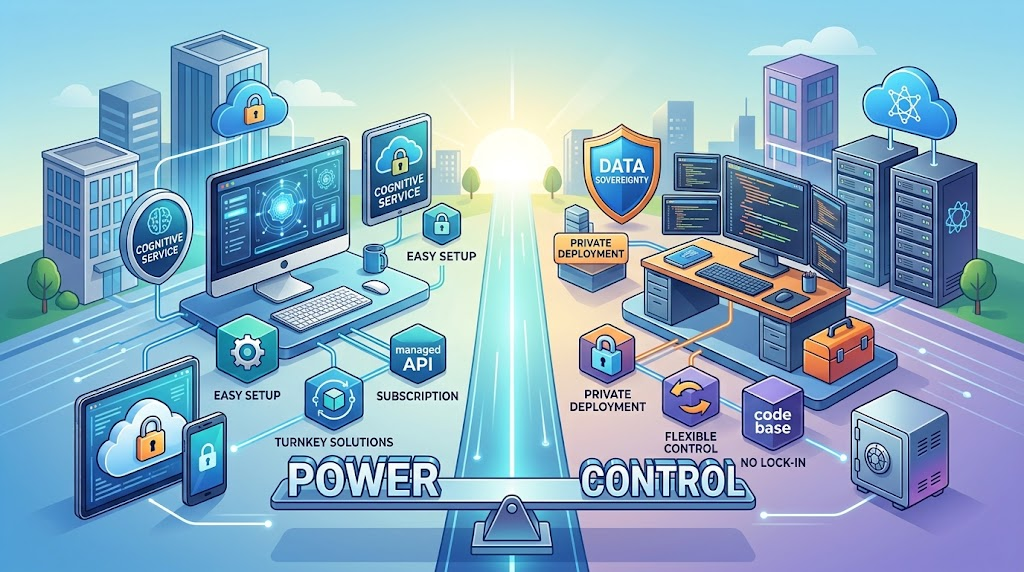
- Small and Medium Businesses: Care level is low to moderate. Most small teams just want tools that work immediately out of the box. Closed packaged apps get you moving fast, but teams wanting more flexibility can still leverage open models through managed cloud APIs without having to manage servers or in-house infrastructure.
- Large Enterprises: Care level is high. Big organizations handle strict compliance rules, trade secrets, and massive data volume. Running open models inside private company walls keeps data strictly private and prevents expensive, long-term vendor lock-in.
Why Having Both Matters
Closed AI gives you instant power and convenience. Open AI gives you independence and long-term control. Having a healthy balance of both in the marketplace keeps prices fair, prevents a handful of tech giants from owning the entire market, and ensures businesses of any size have real choices.
I hope you find this detail useful.