
Congratulations, You’re That Boss
If you’ve ever received feedback that says something like, “You’re great at the work, but people don’t love working for you,” first of all….welcome. You’re in very crowded company.
Second, this article is for you.
 In our weekly Project Failure Files series (every Monday at 9am PT), Sharon and I spend a lot of time talking about what not to do in management and leadership positions. We show every week how certain patterns repeat themselves. Stories change slightly, but the leadership missteps are remarkably consistent. We have a lot of fun doing the show…but it got me thinking of some fun things we could do with these patterns and this content. Trading cards with terrible boss profiles? A “magic 8 ball” that only shares cliche management responses? (ok, that’s actually a good idea)
So instead of another checklist or framework, I thought it might be fun to profile the absolute worst boss imaginable. The kind who feels a little over the top… until you realize you’ve worked for them. Or with them. Or maybe been them on a bad day.
If any of this sounds familiar, don’t panic. Panic is for your employees.
Let’s start with the classic:
“Sleep Is for the Weak” Management
If someone is leaving before 7 PM, you immediately question their commitment. Not out loud, of course. You just casually ask, “Half day?” while checking Slack at 10:43 PM to see who’s still green.
Real dedication means being available at all times. Midnight emails show passion. Weekend messages show hunger. Vacations are fine, as long as people bring their laptop “just in case.”
Here’s the thing this boss never understands: long hours don’t equal high performance. They equal burnout, mistakes, and quiet resentment. People stop telling you when things are broken because they’re too tired to explain. And eventually, they leave. Not because they’re lazy, but because they want a life.
Then there’s the crowd favorite:
The Invisible Promotion Strategy
You love growth. You just don’t love titles, compensation adjustments, or paperwork.
The best way to develop someone is to keep adding responsibility without changing anything else. “This will be great exposure.” “This will look good for you.” “Let’s see how you do with this first.”
How long does proving yourself take? A year. Or two. Or three. Or until the person finally realizes they’ve been promoted in workload only.
From the manager’s seat, this feels efficient. From the employee’s seat, it feels like being tricked into doing the next job for free. Eventually, they’ll stop volunteering. Or they’ll go prove themselves somewhere else, with a paycheck that agrees.
Next up:
 Motivation by Panic

You believe fear is an underutilized leadership tool.
You frequently remind people that the competition is always working harder. That budgets are tight. That job security isn’t what it used to be. You don’t threaten layoffs directly. You just… imply things.
Urgency, after all, drives results.
Except it doesn’t. It drives short-term activity, not long-term thinking. People stop experimenting. They stop pushing back. They stop telling you bad news early. When fear runs the room, self-preservation beats collaboration every time.
Also worth noting: people already know the world is uncertain. They don’t need their boss reinforcing it weekly like a weather forecast.
Let’s talk about development.
One-Size-Fits-All Growth Plans
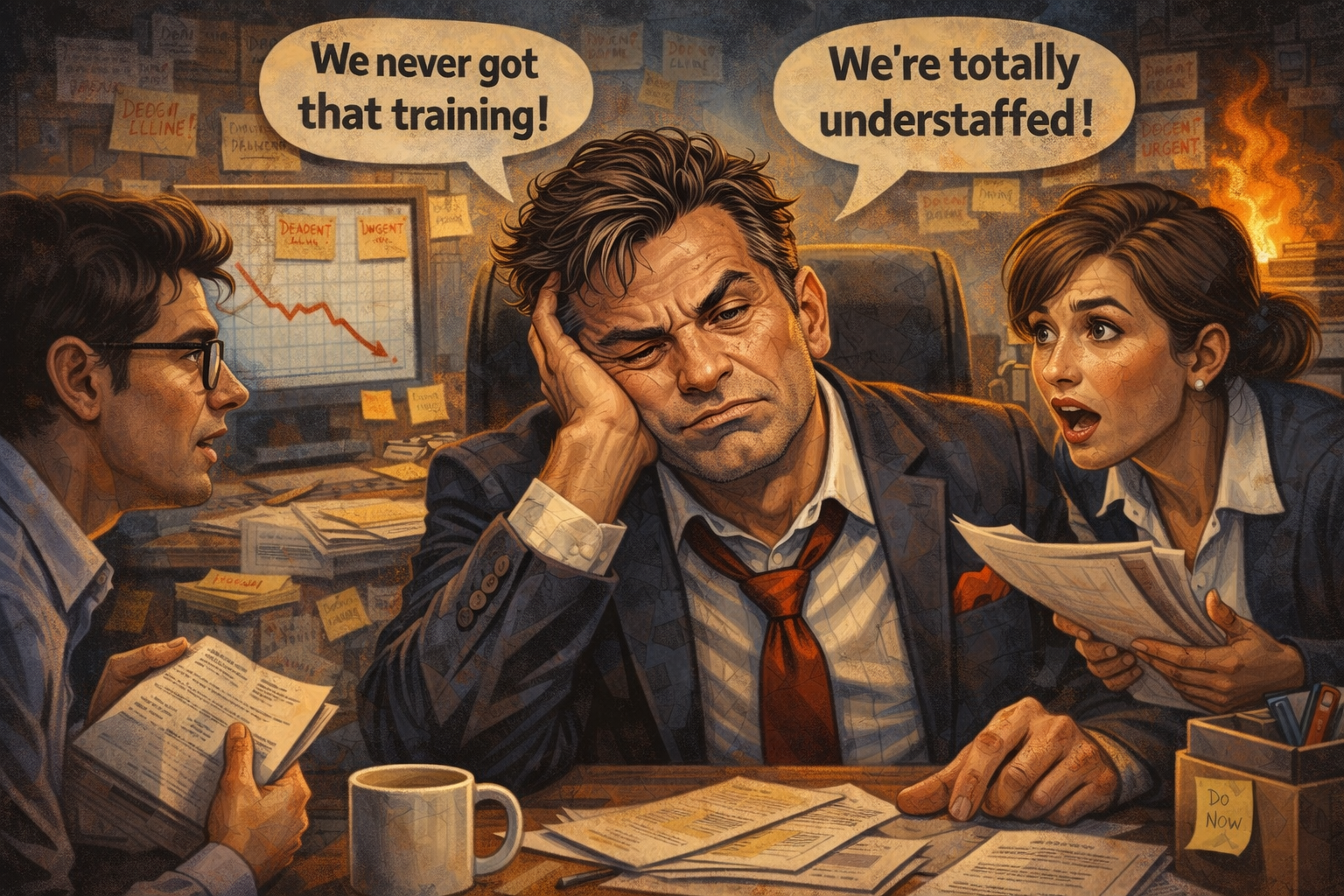
Training is training. The leadership team selected this program, so everyone will attend it, whether it fits their role, experience level, or actual needs.
If someone says, “This doesn’t really apply to my work,” that’s a mindset problem. If they’re serious about their career, they’ll figure out how to make it relevant.
The problem isn’t the training. It’s the message underneath it: We know what you need better than you do. Real development starts with curiosity. Bad development starts with a calendar invite and zero context.
And finally, a personal favorite:
Recognition Roulette
You absolutely recognize people. You just don’t keep track of when or how.
If someone feels underappreciated, that’s on them. They should speak up more. Advocate for themselves. Make their work visible. You’re busy. You can’t be expected to notice everything.
Here’s the catch: when recognition is random, people stop trying to earn it. They focus instead on staying out of trouble. Quiet contributors disappear. Loud ones dominate. And you end up rewarding confidence over competence without even realizing it.
Consistent recognition isn’t about gold stars. It’s about trust. When people know their effort is seen, they’ll give you more of it.
Making Excuses for Bad Habits
Now, if you’re reading this and thinking, “Wow, this boss sounds terrible,” good. If you’re thinking, “But some of this is just how work is,” that’s where it gets interesting.
Most bad leadership isn’t malicious. It’s inherited. It’s learned under pressure. It’s reinforced by systems that reward output over people. Sharon and I have both lived this from multiple angles over 30+ years. These behaviors don’t come from villains. They come from smart, capable managers who were never taught another way.
The good news? Everything on this list is fixable.
Start by noticing where you rely on pressure instead of clarity. Where you substitute hours for outcomes. Where “development” actually means “do more with less.” Where silence has replaced trust.
You don’t have to be perfect. You just have to be honest enough to say, “Maybe I’ve been that boss sometimes.”
Because once you can laugh at it, you can change it.