Why Teaching Project Management Basics Re-Energized Me
For about half my career, I lived inside the project management world. I built PMOs from scratch. I led teams of project managers, business analysts, and engineers at both startups and large companies. I helped organizations figure out how to move work through their systems without dropping it, losing it, or accidentally rebuilding the same thing twice.
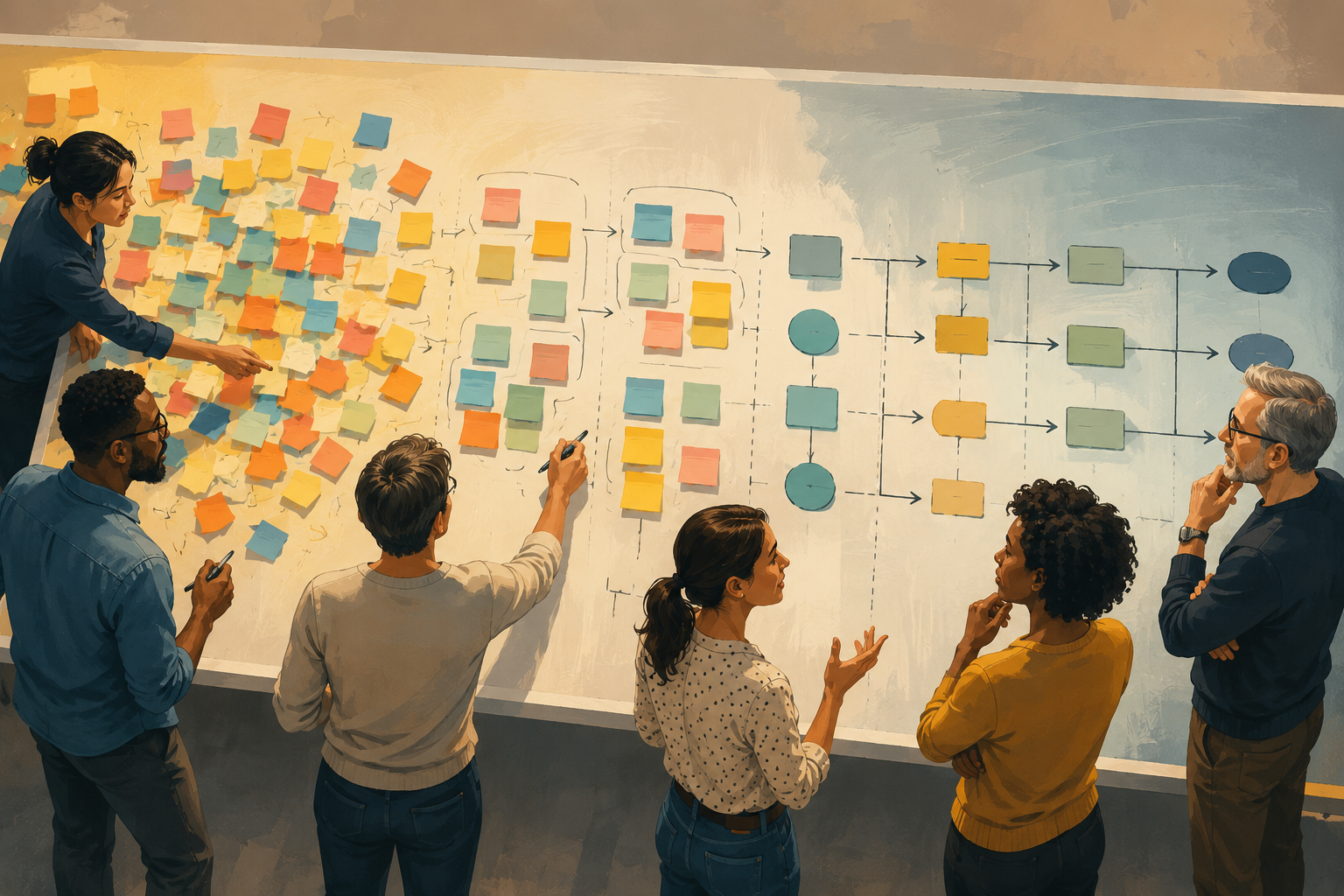 Mid-way through that stretch, I spent a few years as a consultant helping client companies restructure and right-size their development, operations, and even sales and marketing teams. If you have ever seen Office Space, you remember the two Bobs. The consultants brought in to figure out who stays, who goes, and how the org chart should be redrawn. For a handful of engagements, I was a Bob. I did not always love playing that role, but I was (and am) deeply passionate about systems planning and organizational management. Watching a team go from chaos to cadence is one of the most satisfying things I know how to do.
So when a client asked me a couple of months ago to put together a 16-hour foundation course on project and organizational management for their cross-functional team, I said yes immediately. I was not prepared for how much it would re-energize me.
Delivering a PM workshop
The workshop was built as four 4-hour sessions, two classes per session, eight topic areas in total. The arc moved from foundations and project definition, through planning and change management, into risk and execution, and finished with measuring success and sustaining the practice over time. Every session alternated short lecture blocks with practice tasks drawn from realistic scenarios. No technology demos. No methodology evangelism. Just the structural questions every team eventually has to answer: What is actually a project? Who are the real stakeholders? Where are the dependencies hiding? Who is going to push back on this change, and what do we owe them in return?
What I did not anticipate, and what made the experience so good, was how much of my own lived experience the format let me bring in. When we got to dependency mapping, I was not reading from a slide. I was telling a story about a project where we discovered three weeks in that two critical activities both required the same person, who was already double-booked through Q3. When we covered change resistance, I had a dozen examples of leadership behaviors that quietly killed perfectly good initiatives, and a few about behaviors that saved them. When we got to stage gates, I could point to projects I have watched run away from their teams because nobody installed a checkpoint before the budget evaporated.
But the better surprise was what the participants brought back to me.
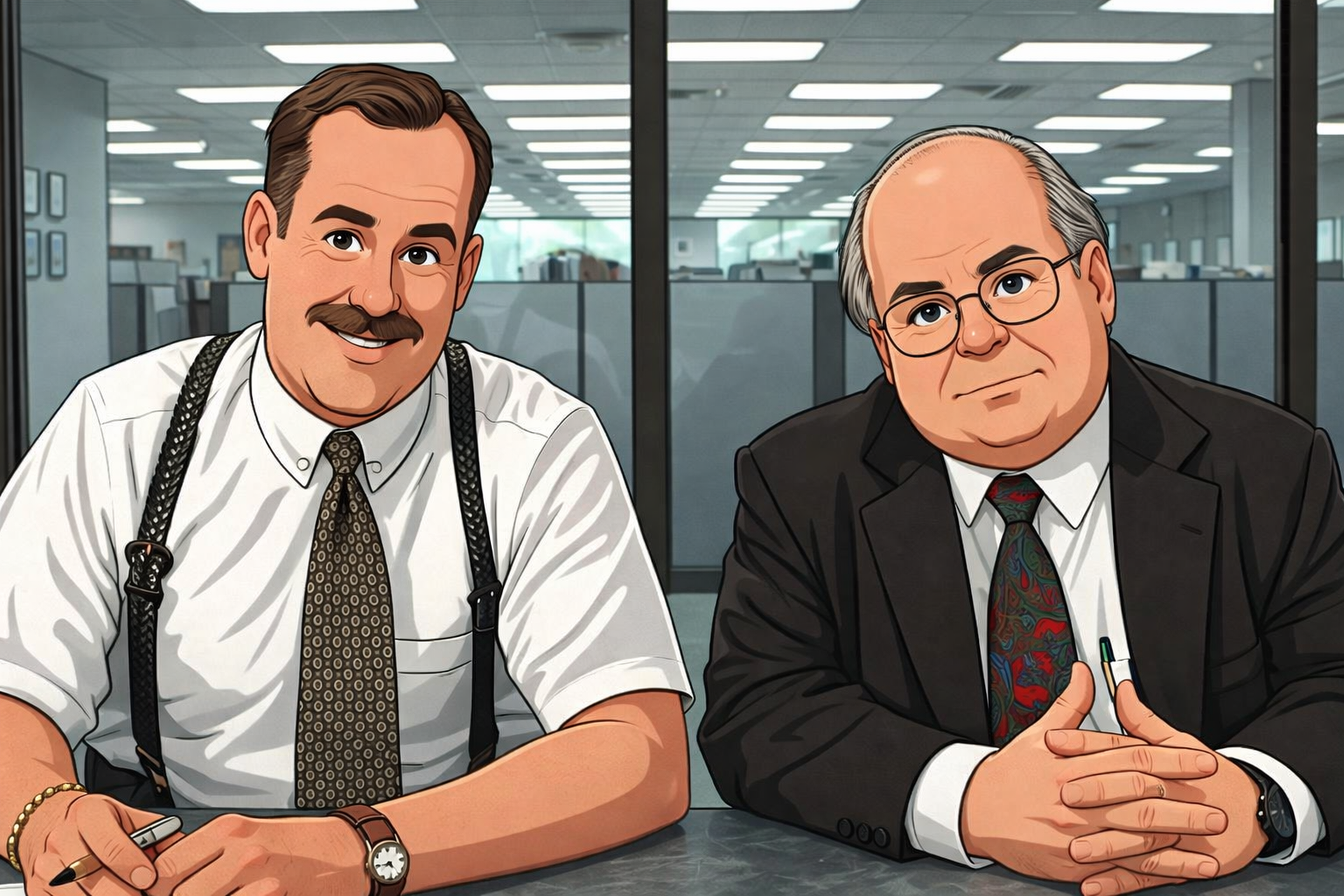 These were not professional project managers. They were department leads, subject-matter experts, and individual contributors who run projects without the title. And every practice task surfaced examples I had never thought about in quite the same way. One participant described a “small change” rolled out in their area that had three downstream consequences nobody mapped in advance. Another described a stakeholder group that nobody had even identified as a stakeholder until the project was already failing. A third walked through a “completed” project that, on closer inspection, had three unfinished documentation tasks, two unresolved handoffs, and one open question nobody wanted to ask out loud.
That is where the real teaching happens. Not in the slides. In the moment when somebody says, “Wait, we do that,” and the room nods.
What the attendees got out of it
By the end of the four sessions, the participants had a shared vocabulary, a usable project definition template, a planning checklist, a risk and stage-gate framework, and a clearer sense of what good looked like. They also had each other, which mattered more than I expected. Cross-functional groups doing this kind of work together build a working language they did not have before, and that language outlasts the workshop.
If anyone is interested in running this training inside their organization, please reach out. Happy to send a syllabus. I’m delivering this primarily as a virtual offering as 8 two-hour sessions or 4 four-hour sessions, but I can also package it into 2 full-days on-site for organizations that need to move faster and want some additional coaching on building out your PMO. Either format works, and both can be tailored to the realities of your org rather than someone else’s template.
If you have a team of accidental project managers, or if you suspect your projects are running on instinct rather than structure, this is the workshop I would put in front of them. Reach out directly. I still love this work. Over the past 30 years, I have just gotten better at making it useful to the people on the receiving end.