
Content Strategy: Why Your Best Defense Is Content Nobody Else Can Make
For most of content marketing’s history, the primary competitive advantage was volume and consistency. Showing up regularly with useful, well-structured information was enough to build an audience, earn trust, and stay visible in search. That bar is being reset. AI-generated content has made it possible for any organization to produce competent, keyword-optimized, reasonably helpful content at scale for almost no cost, which means the floor for “good enough” has risen dramatically while the ceiling for what actually differentiates a brand has shifted to something else entirely.
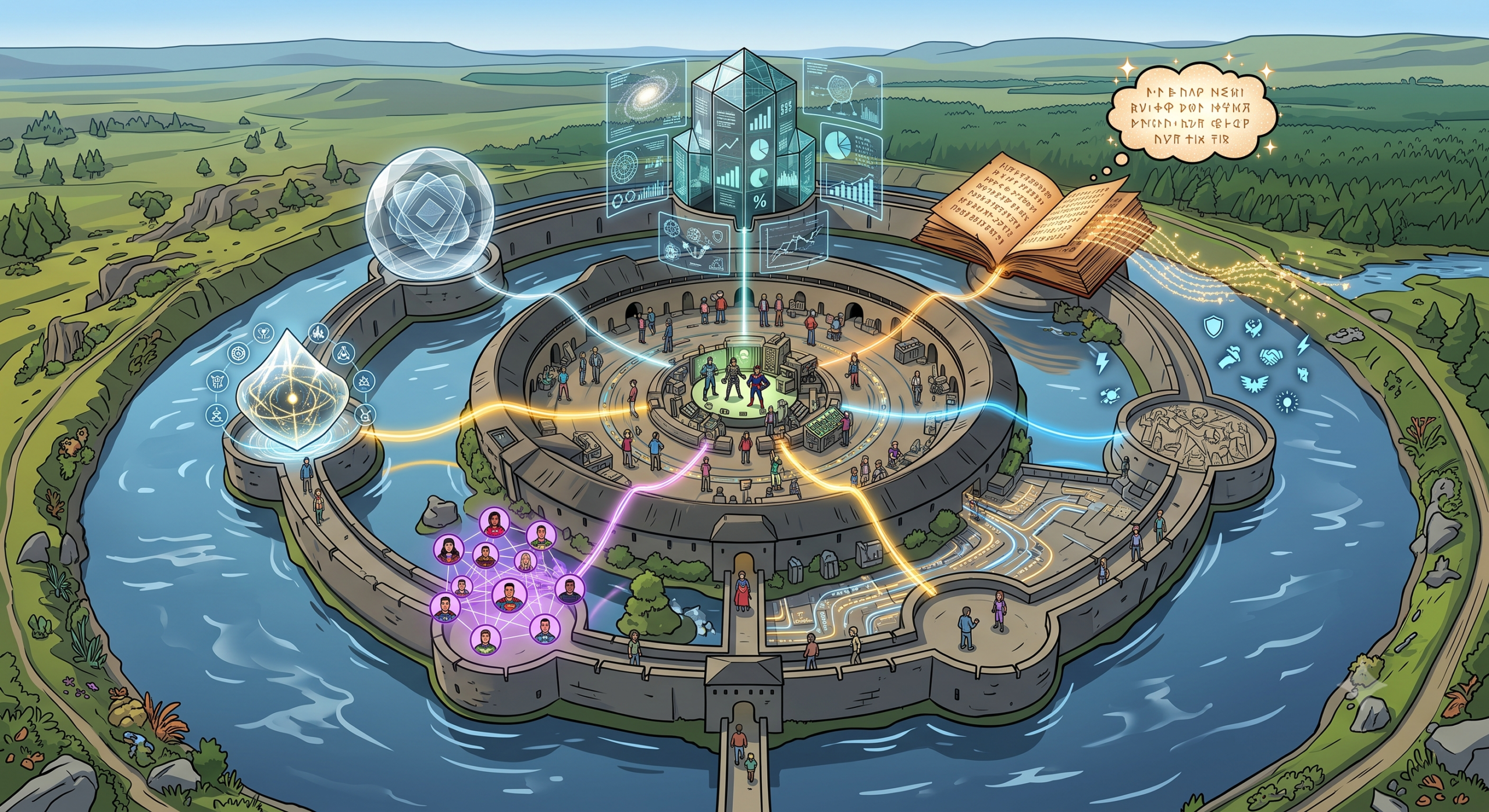 This is not yet a crisis for most content programs. The wave is real but uneven, and many organizations are still building audiences the traditional way with reasonable success. But the trajectory is clear enough that the organizations preparing now will have a meaningful structural advantage over the ones who wait until the pressure is undeniable. Building a “Trust Moat” is not a panic response to an immediate threat — it is a long-term strategic posture that makes your content genuinely irreplaceable rather than merely useful.
This article is part of my ongoing Content Strategy series, designed as a practical reference for individuals and teams who want concrete strategies they can apply to their content programs. This piece is about building the kind of content that AI cannot replicate — not because it is technically complex, but because it is yours, rooted in your data, your experience, your perspective, and your relationship with your audience in ways that no generative tool can manufacture.
What a Trust Moat Actually Is
A moat in business strategy is a durable competitive advantage — something that protects your position not just today but over time, because it is genuinely difficult for competitors to replicate. The Trust Moat in content works the same way: it is the accumulation of content assets, audience relationships, and brand signals that make your platform a destination people return to rather than a result they stumble across and forget.
This is a topic I’ve spent a lot of time thinking about, and slowly altering my own content strategy for this site — and for the clients that I work with. The distinction between destination content and result content is worth sitting with. Result content answers a question and is immediately forgotten. Destination content builds a relationship with a source the reader wants to return to. In an environment where content volume is no longer a differentiator, the question audiences are increasingly asking is not “is this accurate?” but “do I trust where this is coming from?” Trust builds slowly and is difficult to manufacture quickly, which is precisely what makes it defensible.
Six Ways to Build the Moat
Proprietary data and original research is structurally impossible to replicate, which makes it one of the highest-value trust assets available to any content program. This does not require a formal research budget. It can be as simple as aggregating anonymized patterns from your own customer base, fielding a focused survey among your audience, or publishing internal benchmarks your organization generates in the normal course of business. When you publish findings that no one else has because the data came from your unique position in the market, readers have to come to you to get it. That is the definition of destination content. A recurring research asset — an annual report, a quarterly benchmark — gives your audience a reason to return on a predictable cadence and compounds in authority over time.
Personal vulnerability and earned perspective is the building block most content programs are most reluctant to use, and one of the most defensible. AI can produce authoritative-sounding content on almost any topic, but it cannot produce content that reflects genuine personal experience — a decision that went badly, a perspective that changed, a lesson learned from a specific failure in a specific context. That kind of content is irreplaceable because it is true in a way only the author can verify. Personal vulnerability does not mean oversharing or manufacturing emotional moments for engagement. It means being willing to say “here is what I got wrong” or “here is what I believed that turned out not to be true” — and meaning it specifically rather than generically. The most trusted voices in any field are not the ones who appear to have always been right. They are the ones who are honest about what they have learned and how they learned it.
Contrarian viewpoints backed by reasoning signal that the author has thought independently rather than simply synthesizing consensus. The key phrase is backed by reasoning — a contrarian position without a rigorous argument is just provocation, which earns attention briefly and trust not at all. The contrarian angle does not have to be dramatic. It can be as simple as “the conventional wisdom on this topic is incomplete because of Y” or “most advice here optimizes for the wrong outcome.” What matters is that the argument is genuinely yours, grounded in specific evidence or experience, and willing to engage with the strongest version of the opposing view. Frame the contrarian angle as a service to the reader rather than a performance of independence, and always acknowledge the mainstream view fairly before pushing back on it.
Consistent and distinctive voice is one of the clearest signals that content comes from a real person with a real perspective. AI-generated content tends toward polished neutrality — well-structured, readable, and fundamentally voiceless. A recognizable authorial voice, built from consistent word choices, recurring perspectives, and a characteristic way of framing problems, becomes one of the most powerful trust assets a content program can develop over time. Readers who recognize your voice have developed a relationship with your thinking, not just your information. Voice takes time to develop and is almost impossible to manufacture quickly, which is exactly what makes it defensible. A recurring series format, like this one, is one of the more reliable ways to build and reinforce it.
Community and audience relationship as content is entirely non-replicable because it belongs to the specific history between a brand and the people who have followed it over time. Comments, responses, and direct audience engagement are not just distribution signals — they are evidence of a relationship built over time, and that evidence is visible to new readers in ways that matter. A content program that visibly responds to its audience — publishing pieces that directly address questions or feedback from readers — demonstrates the relationship rather than just claiming it. That demonstration is itself a trust signal, and it compounds with every piece of content that shows the audience has been part of shaping what gets made.
Transparency about process and limitations is one of the quieter trust signals in content, and one of the most underused. In an environment where AI can produce confident-sounding content on any topic regardless of the underlying evidence, a willingness to be honest about what you do not know, how you arrived at your conclusions, and where your thinking has evolved is a meaningful differentiator. This does not mean hedging everything or undermining your own credibility with excessive caveats. It means being specific about the basis for your claims, acknowledging where the evidence is mixed, and being willing to say “I am not sure” when you are not — which builds rather than erodes trust with a sophisticated audience. “I used to think X, and here is what changed my mind” is one of the highest-trust content moves available, and it is one that no generative tool can make authentically.
The Moat Is Built Over Time, Not in a Campaign
The Trust Moat is not a content initiative with a launch date and a results dashboard. It is a posture — a set of consistent choices made across every piece of content over an extended period — and its value compounds in ways that short-term metrics will not always capture. A single contrarian post does not build a moat. A hundred pieces of content that consistently reflect original data, earned perspective, distinctive voice, and genuine audience relationship do.
The organizations that will feel the AI content wave least are the ones that have been building authentic audience relationships longest — not because they are immune to the disruption, but because they have already built something the disruption cannot manufacture. The goal is not content that is harder to compete with. It is content that is genuinely worth returning to, because it reflects the accumulated perspective, relationships, and intellectual honesty of a specific person or organization that has been showing up consistently over time. That is not a content tactic. It is a content identity. And it is the only kind of content strategy that gets more valuable the longer you sustain it.