
The Real Competitive Edge in AI Isn’t IQ—It’s EQ
We’ve officially entered the age where your chatbot might understand your sarcasm better than your coworkers.
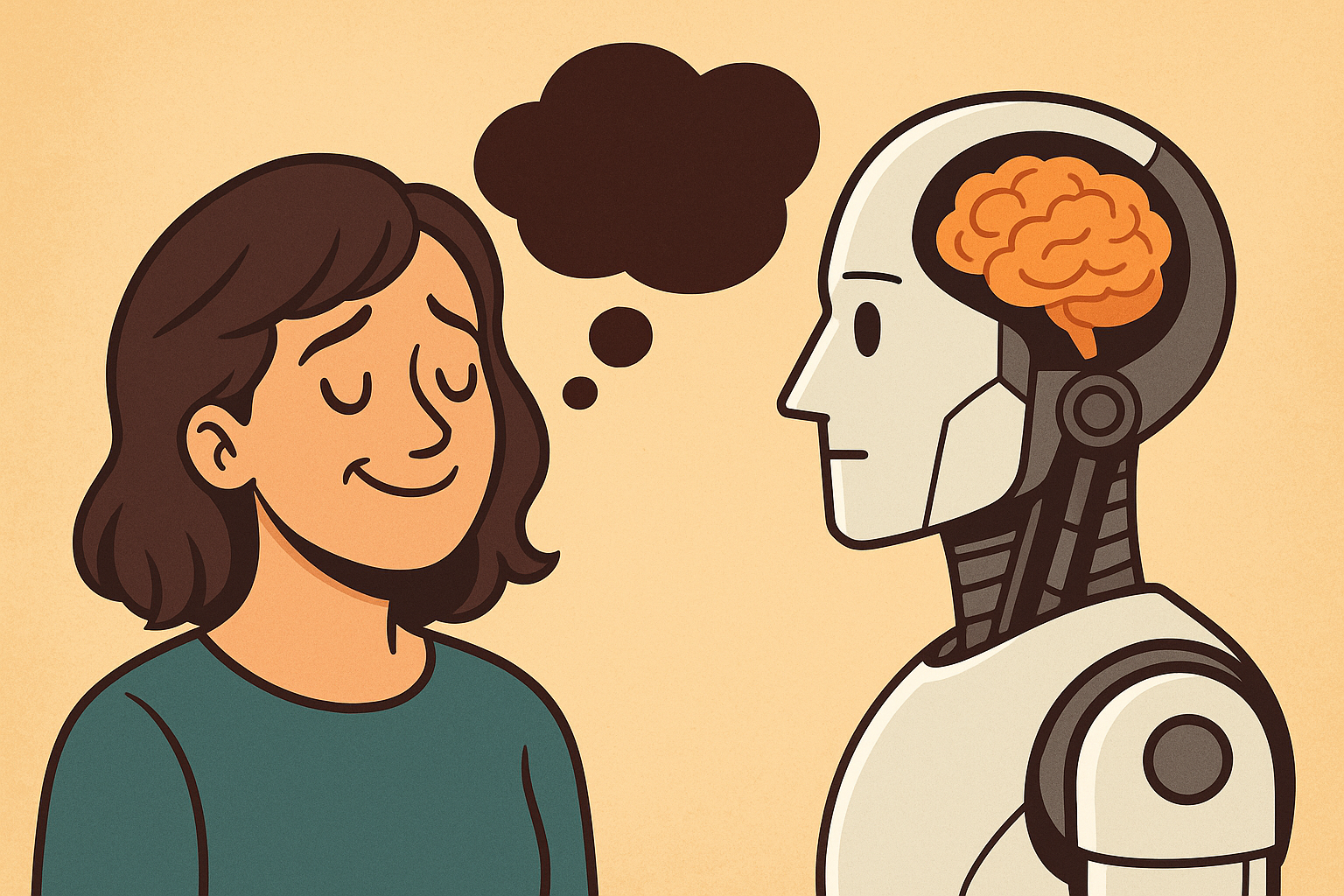 Not long ago, AI was all about raw horsepower. Who could answer faster? Who had more tokens, bigger models, flashier benchmarks? It was a silicon arms race. But lately, a funny thing happened on the way to AGI: EQ walked into the room, quietly sipping espresso, and said, “Hi, I remember your dog died last week. Want to talk about it?”
From Facts to Feels
Here’s the real plot twist: intelligence alone isn’t enough. IQ is great for chess and calculus, but it won’t help your assistant survive a Teams or Zoom call with your boss or decipher the tone of an all-caps text from your mother. That’s where EQ—emotional intelligence—comes in. The ability to read the room, remember the vibe, and not just respond to what you say, but how you say it.
GPT-4o made a splash for being fast, multimodal, and surprisingly personable. It could read your tone, remember you like dry humor, and (usually) avoid sounding like a malfunctioning Alexa. But it wasn’t always great at context. You could pour your heart out in paragraph one, and by paragraph three it would be cheerfully suggesting banana bread recipes.
GPT-5, on the other hand, showed up like that one friend who actually listens. It doesn’t just hear what you said—it remembers how you said it last week. It understands the difference between “I’m fine” and “I’m fine.” (One means “all good,” the other means “someone’s getting unfriended tonight.”)
The Memory Game Gets Personal
Let’s talk memory, because that’s where the real leap happened. GPT-4o could remember stuff across a session, sure. But GPT-5? It’s the one keeping a diary on your behalf. It knows you’re launching a product in October, your brand voice leans toward “sarcastic with a side of optimism,” and that you’re still not over the whole Google Inbox debacle.
This isn’t just convenience: it’s a competitive edge. AI with memory becomes sticky. It builds rapport. It doesn’t start from scratch every time you open a new window. And in a world of constant noise and zero attention spans, that continuity feels like magic.
But memory alone doesn’t cut it. What’s changing the game now is situational awareness. AI that can shift tone based on your mood, not just your words. AI that can sense, “You’re not in the mood for dad jokes today,” and dial back the snark.
GPT-5 has more of that. It’s like the coworker who knows not to make small talk before coffee. The kind of assistant that picks up when your email sounds passive-aggressive, and either leans in or tactfully rewrites it, depending on your intent. This isn’t just natural language processing. This is social navigation. Emotional nuance. And let’s be honest, the bar isn’t very high. Half the humans in your life don’t manage this.
Here’s the weird part: we don’t just want useful AI. We want likable AI. Not in a creepy, let’s-be-friends way, but in the “don’t-make-me-dread-this-interaction” way. GPT-5 leans into this with personality controls, tone modulation, even consistency across responses. It doesn’t just say things—it says them your way.
Suddenly, voice and tone are table stakes. If your AI sounds like a phone tree from 2008, you’ve already lost. The competitive battleground isn’t “Who has the most data?” It’s “Who gets me?”
Why This Matters
You might be thinking, “Cool, but I’m not making an AI.” Doesn’t matter. If you’re building anything with customer touchpoints—apps, content, UX flows, support experiences—you need to think like this. People remember how things made them feel. They stay loyal to tools that “get” them. They leave the ones that feel robotic (in a bad way).
And here’s the kicker: EQ isn’t just a nice-to-have. It’s becoming a must-have. AI that lacks emotional nuance gets filtered, blocked, or worse—ignored. AI that nails context? It becomes part of the team. Part of the brand. Part of the relationship.
TL;DR version:
- IQ makes AI smart.
- EQ makes AI useful, likable, and—dare we say—human.
- GPT-4o showed glimmers. GPT-5 delivers a fuller emotional range.
- Personality, tone, memory, and situational awareness are no longer optional.
- Context is the new currency. Spend it wisely.
So yes, the bots are getting smarter. But more importantly, they’re finally learning to read the room. And that might just be the most intelligent thing they’ve done yet.